
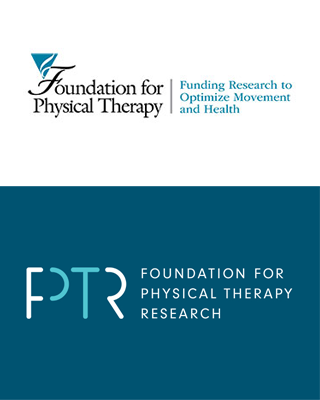


When I joined the Foundation for Physical Therapy, it was at a moment of reflection. The organization was approaching its 40th anniversary with a brand identity that hadn’t changed in nearly as many years.
In 2018, I took a leadership role at an organization that served as the research funding mechanism of the American Physical Therapy Association (APTA). Despite decades of impact in funding research and launching dozens of scientific careers, the Foundation for Physical Therapy’s outdated logo and name no longer communicated the organization’s relevance or its future. I led the charge to bring the brand into the present. Building on existing stakeholder research, I guided the rebranding effort from strategy to execution. I located a logo designer within budget, designed all print and digital creative deliverables, and oversaw a complete overhaul of the organization’s online presence, publications, and event displays in under three months. This included personally redesigning the main site at foundation4pt.org and the student-facing site marquettechallenge.com.
The foundation’s board was uncertain about moving away from the legacy identity. Change required building trust. I worked individually with key board members, presented options with clarity and empathy, and ultimately brought the group to consensus on updating the brand along with a new name, the Foundation for Physical Therapy Research. This shift made the organization’s purpose unmistakable. The new identity debuted on time at the American Physical Therapy Association (APTA) national meeting alongside a full suite of new materials to appeal to APTA’s nearly 100,000 members.
The transformation would not be complete without connecting the organization’s long-time donors with the new look. I created a commemorative booklet for our annual gala and presented each of our major and legacy donors with a lapel pin to create a tangible connection connecting the organization’s past and its future.

Guiding an Event-Driven Nonprofit Through COVID
Shortly after FPTR launched its new identity, the organization faced the challenges of COVID-19. Student-led events were central to its fundraising strategy, and when in-person engagement became impossible, I helped lead a rapid shift to virtual programming. Over eight months, I organized, promoted, and executed 10 successful online events that sustained grassroots fundraising and awareness. These initiatives engaged audiences from student fundraisers to major donors and emerging scientists, while also helping expand the organization’s reach and recruit new board and advisory committee members.